Why Your Next Luxury Car Should Be a Lightly Used EV
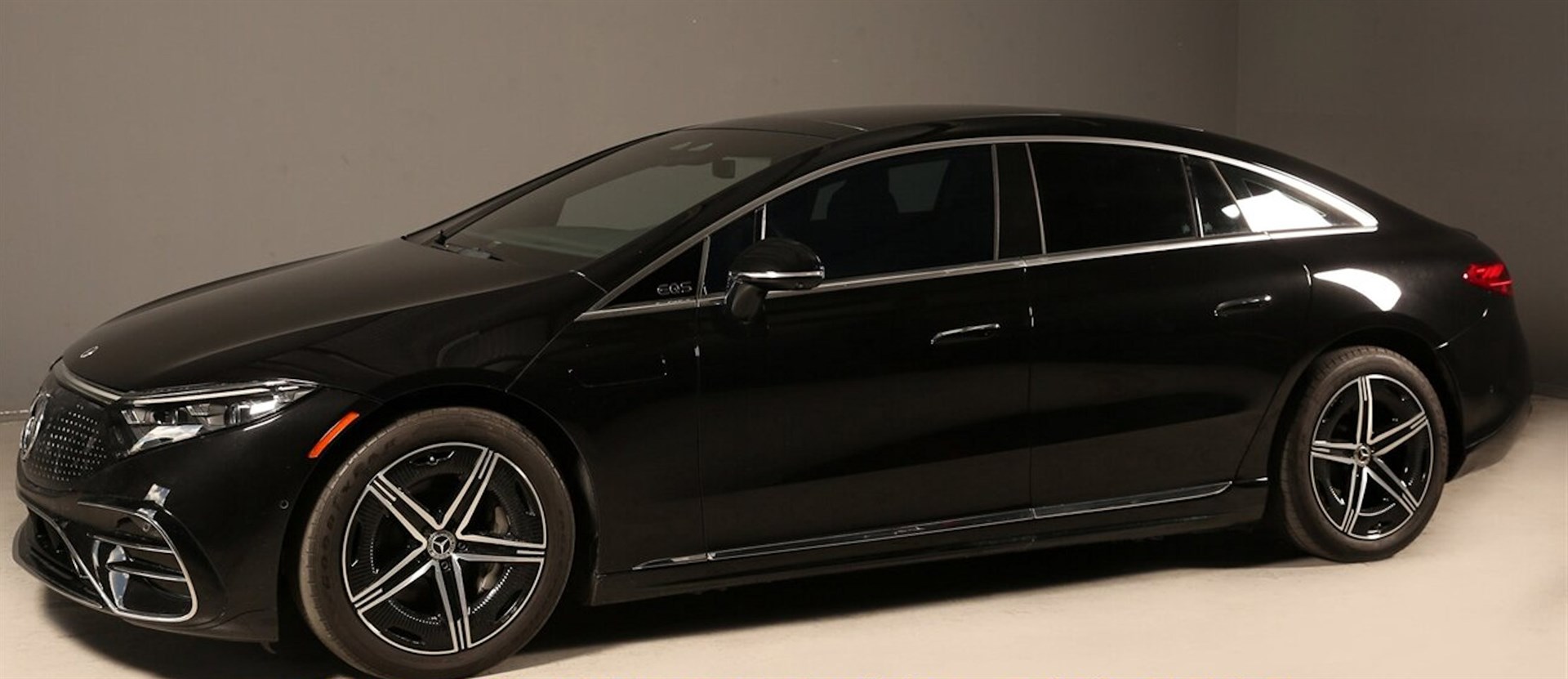
Why pay new-car money for an electric vehicle when a nearly identical one with a few thousand miles on it costs thousands less? That is the question the used-EV market is asking right now, and the numbers make the answer obvious.
But owning an EV is not the same as owning a gas car. Maintenance, warranty, and what "condition" even means all work differently. Here is what changes, why the math favors buying lightly used, and what to check before you sign.
The price gap is bigger than any other segment
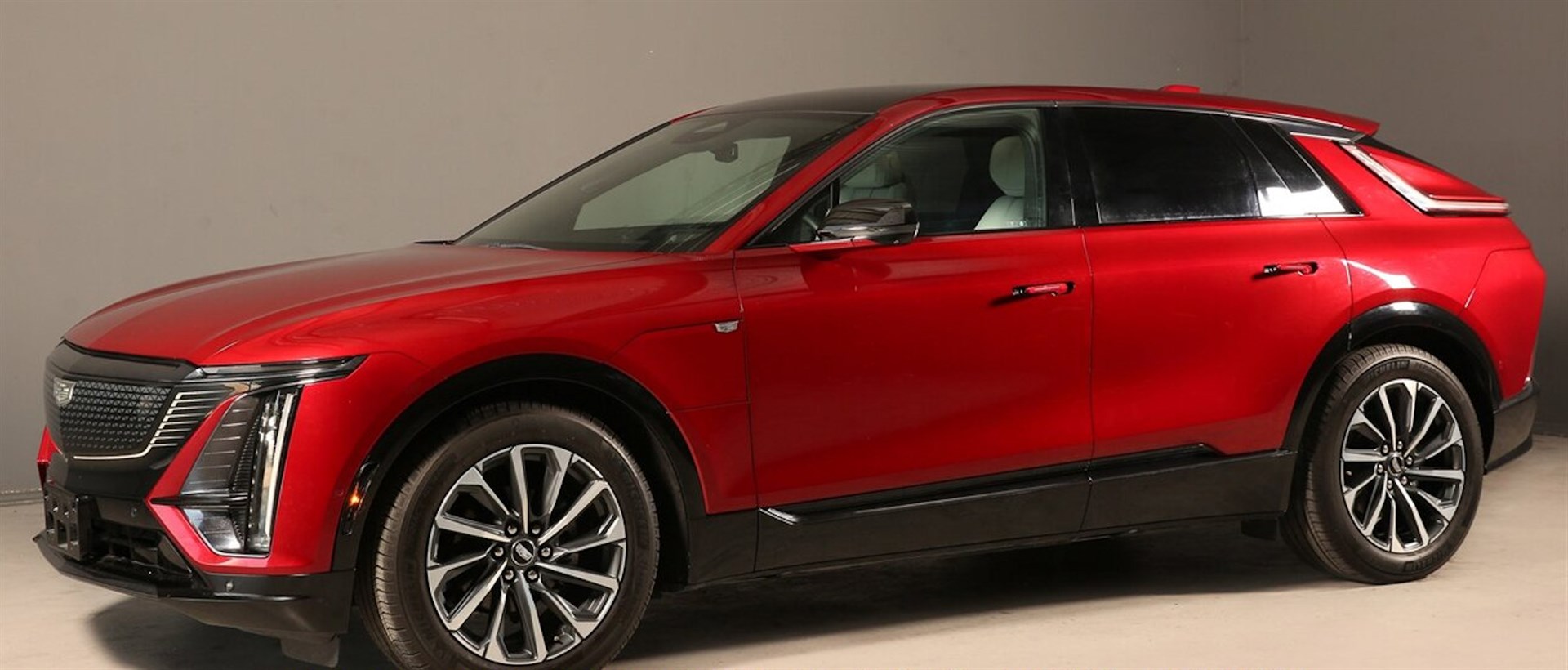
New EVs lose value faster than any other category of vehicle, and that loss lands on the first owner. Consider a car on our lot today: a 2024 Cadillac LYRIQ Tech with about 21,000 miles, listed at $34,174. The same car stickered at roughly $58,600 new — a discount of more than 40% on a two-year-old vehicle with factory battery warranty remaining.
It isn't a Cadillac quirk. A 2025 Tesla Model Y Long Range with under 15,000 miles is listed in Houston around $35,000 against a new sticker near $49,000. Car and Driver recently pointed to the same pattern on the Honda Prologue, with 2024–2025 examples under 10,000 miles selling for roughly $15,000 below new.
The federal $4,000 used-EV tax credit ended September 30, 2025, so the deal is no longer a rebate. It's the price itself — and prices have already adjusted for that.
EV vs. gas: maintenance
Routine maintenance on an EV mostly means keeping up with wear items: tires, cabin air filters, wiper blades, brake fluid. No oil changes, spark plugs, timing chains or transmission service.
The one EV-specific item is battery coolant. Most EVs with liquid-cooled packs eventually call for a coolant service — think of it as a spark-plug interval, not an oil-change interval, done after tens of thousands of miles. A few brands, Tesla among them, don't schedule one at all. Check the owner's manual for the specific model.
Regenerative braking means pads and rotors last far longer than on a gas car — so long, in fact, that rotors can corrode from disuse, which is why they're on the checklist below.
EV vs. gas: powertrain complexity
An electric motor has a handful of moving parts. A modern turbocharged luxury engine has hundreds, plus a multi-speed transmission behind it. Fewer parts means fewer things that can fail, and when a powertrain issue does come up on an EV, the limited number of components makes it easier to isolate.
EV vs. gas: warranty
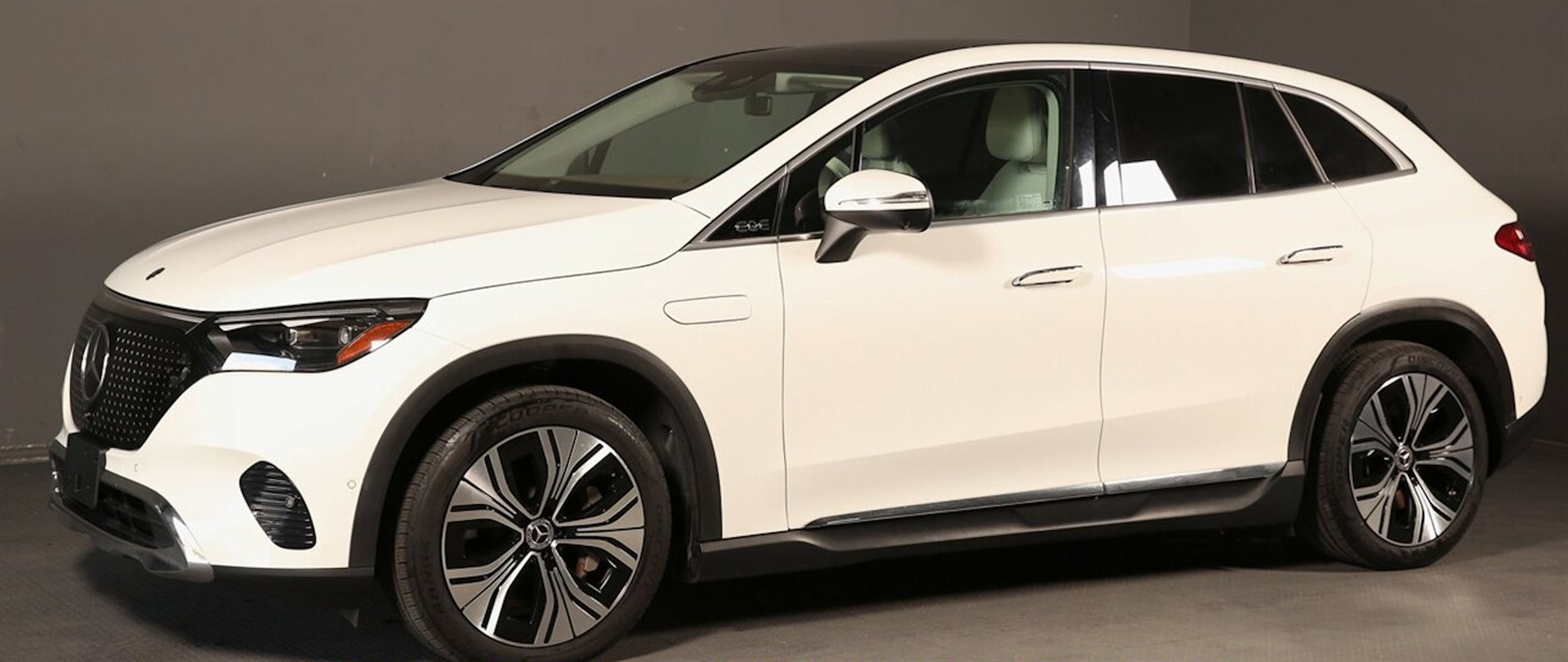
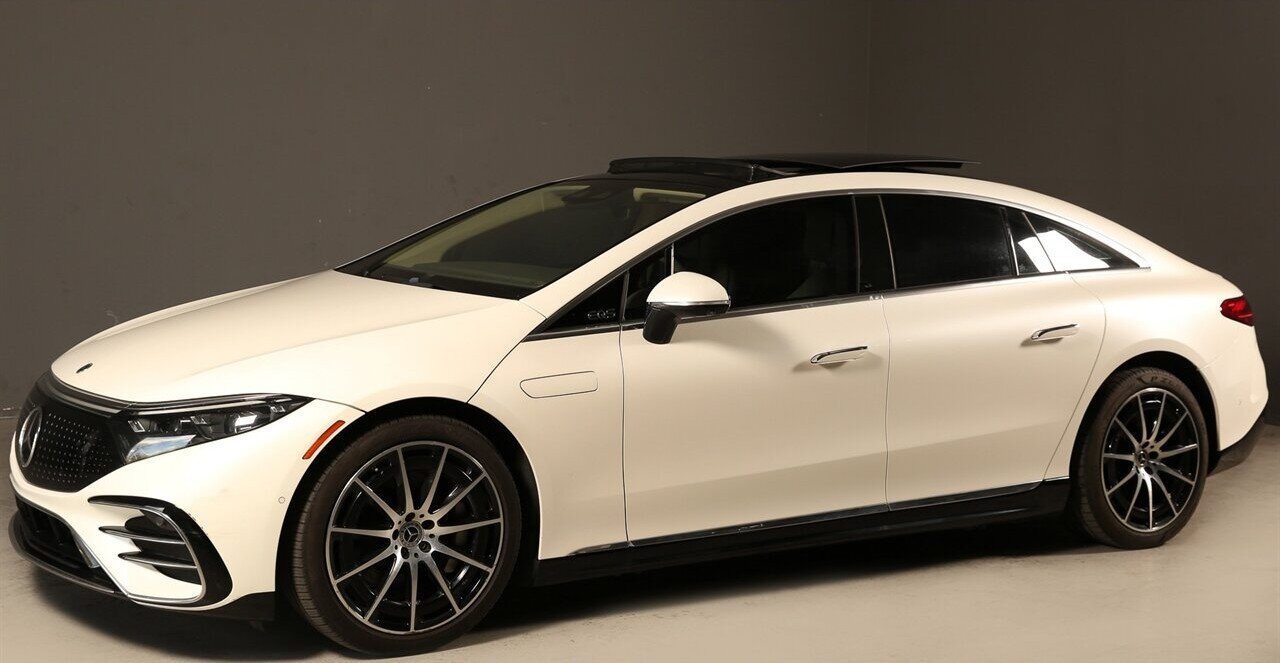
Powertrain warranties on gas cars vary widely by brand. Battery warranties on EVs don't: every major manufacturer selling in the U.S. covers the high-voltage battery for at least 8 years / 100,000 miles with a minimum capacity guarantee, and the coverage transfers to the next owner. Tesla runs 8 years and 100,000–150,000 miles depending on the model; Mercedes-Benz covers its EQ models for 10 years / 155,000 miles. That is longer than the powertrain coverage on most gas-powered luxury cars.
Verify your specific VIN with the manufacturer before you buy. It takes five minutes, and it's the most valuable five minutes in the deal.
Battery health: get the data, not the sales pitch
On a gas car you inspect the engine. On an EV, the battery is the engine, the transmission and most of the car's value — and unlike an engine, its condition can be measured.
Three ways to get real data:
- Displayed range at 100% charge, compared to the EPA rating when the car was new. A 2021 Model Y Long Range rated at 326 miles that shows 290–300 at full charge is normal wear.
- A battery health report by VIN. Tesla's app can run one on Teslas; third-party services like Recurrent generate them for most brands.
- The auction condition report. Many dealers source used EVs through Manheim, the largest wholesale auction, which includes a battery health score on many EV condition reports. If the dealer bought the car there, that report already exists — ask for it before paying for your own.
Outright battery failure is rare. Packs degrade gradually, and manufacturer data and independent fleet studies show modern packs keep the large majority of their capacity well past 100,000 miles.
Before you buy: the five-minute checklist
- Home charging. A Level 2 (240-volt) charger in your garage is what makes an EV effortless. Installation in the Houston area typically runs a few hundred to a couple thousand dollars depending on your panel.
- Tires. Instant torque and extra weight wear tires faster. Check tread depth and that all four match.
- 12-volt battery. The most common failure item on EVs over four years old.
- Brake rotors. Look for corrosion from low use.
- Software and subscriptions. Confirm which features transfer. Driver-assist packages and connectivity plans don't always follow the car to the next owner.
- History. Pull the CARFAX. Underbody impacts matter more on an EV because the pack sits in the floor. Prior rental or fleet use isn't automatically bad, but you want to know and you want the price to reflect it.
A note on Houston heat — and Texas fees
Heat degrades batteries faster than cold does. Every Tesla, Mercedes EQ, BMW i-series and Cadillac LYRIQ uses active liquid thermal management, which is why they hold up here. Older EVs without it are a different story in a Texas summer. Two habits matter most: park in shade or a garage when you can, and don't leave the car sitting at 100% charge for days.
Budget note: Texas adds a $200 annual EV registration fee on top of standard registration.
How Ultimate Motorsport sells electric vehicles
We've sold over 19,000 vehicles in Houston since 2009 and have specialized in Tesla since the cars first reached the used market. Every EV on our lot comes with:
- The original MSRP and full factory option list on the listing
- A CARFAX report on every vehicle
- Transparent pricing with no packed fees
- AS-IS sale with full disclosure — we tell you what we know before you buy, not after
On any EV in stock, we'll tell you where the car came from, show you its displayed range at full charge, and share the auction battery health score when one exists.
If you want measured data before you commit, an independent Voltest battery health test is available on any EV in stock for $99. It's a third-party report, not a UMS warranty — but it takes the guesswork out of the most expensive component on the car.
Frequently asked questions
Is a lightly used EV really cheaper than a new one?
Yes, and by more than a comparable gas car. EVs take their steepest depreciation in the first two to three years. A low-mileage used EV captures most of that drop while giving up very little in features or battery life.
How much range loss is normal on a used Tesla?
Most Model 3 and Model Y owners see roughly 5–10% capacity loss in the first 50,000 miles, then a much slower decline. If a car shows less than about 80% of its original rated range at full charge, ask why.
Does the battery warranty transfer to a second owner?
Yes for every major manufacturer. Coverage is tied to the VIN and in-service date, not the owner. Confirm the remaining term directly with the manufacturer.
Can I still get a tax credit on a used EV in 2026?
No. The federal used-EV credit expired September 30, 2025. Some utilities and employers offer charger-installation rebates — check with CenterPoint and your employer.
Does UMS offer a warranty on used EVs?
All UMS vehicles are sold AS-IS with full disclosure. Any remaining manufacturer battery and drive-unit warranty stays with the car, and we'll help you verify exactly what coverage is left. If you want measured data before you buy, an independent Voltest battery health report is available for $99 — a third-party document, not a UMS warranty.
Ultimate Motorsport Inc.
10311 Altonbury Lane, Houston, TX 77031
281-506-8808 | ultimatems.com